

Artificial intelligence: what it is, how it works and why it’s revolutionizing marketing, business and creativity
Table of Contents
Artificial intelligence explained simply (but seriously)
Artificial intelligence (AI) is the ability of machines to simulate human cognitive processes: to understand, learn, respond and even create. It’s not magic, but the result of complex algorithms and an immense amount of data processed by artificial neural networks.
From intelligent search engines to AI apps for creating images and text, AI is today the most pervasive technology, capable of profoundly changing the way we communicate, work and make decisions.
A brief history of Artificial Intelligence
The term was coined in 1956 at Dartmouth College, but only in the last decade has AI reached true maturity thanks to machine learning, deep learning and computing power. From the insights of Alan Turing to ChatGPT, Midjourney and Gemini, the journey has been rapid and unpredictable.
Today artificial intelligence is embedded in smartphones, business CRMs, e-commerce platforms, and apps for creating images or writing text.
How artificial intelligence works
Every AI system is built on three fundamental elements:
- Data, the raw material it “learns” from.
- Machine learning algorithms, which make it possible to recognize patterns and generate predictions.
- Artificial neural networks, inspired by the human brain, which allow machines to evolve autonomously.
The combination of these factors makes possible everything we call generative AI, computer vision, speech recognition or intelligent automation.
The main types of AI
Not all AI is the same. There are various levels of complexity:
Weak Artificial Intelligence – specialized in a single task (for example, a chatbot).
Strong Artificial Intelligence – theoretical, capable of thinking like a human being.
Generative AI (GenAI) – the most popular today, able to create original content, images, videos and text.
Practical applications of artificial intelligence
Artificial intelligence is now everywhere: it enters every sector, transforming processes, business models and even languages. It’s no longer just about automating, but about enhancing human intelligence, enabling people and companies to make faster, more creative and more informed decisions.
Here are the fields where AI is proving its most revolutionary impact.
Marketing and digital communication
Marketing is one of the most fertile grounds for applying AI.
From automatically optimized advertising campaigns to semantic SEO and the creation of personalized content, companies today can analyze millions of data points in real time and achieve results that were unthinkable just a few years ago.
Platforms like Google Ads, Meta Ads, LinkedIn Campaign Manager and TikTok Ads integrate machine learning algorithms that analyze billions of signals in real time: age, interests, behaviors and user context.
The result? Personalized ads that reach the right audience, at the right time, with the most effective message.
But it’s not just about advertising.
In content marketing, tools like ChatGPT, Jasper AI or Copy.ai help create SEO-optimized copy, more persuasive headlines and personalized newsletters in just a few minutes.
In social media management, platforms like Hootsuite AI or Metricool AI Assistant suggest the most suitable tone of voice and analyze performance to understand which posts work best.
And then there’s predictive SEO, which uses AI to anticipate users’ search intentions and suggest future keywords. In practice, artificial intelligence allows marketers not to chase trends, but to anticipate them.
In short, in digital marketing, artificial intelligence has made extremely powerful tools accessible to everyone, but only those who truly understand the logic, data and platforms know how to turn them into strategies that generate value.
Image and video creation
It used to take hours to produce a striking image. Today, a few words are enough.
With tools like Midjourney, DALL·E, Leonardo AI, Runway or Pika Labs, anyone can generate illustrations, logos, animations or videos starting from a simple text prompt.
A social media manager can create original visuals for a campaign in just a few minutes; an agency can offer clients instant mockups and graphic concepts; an artist can experiment with new aesthetic combinations without technical limits.
And it’s not just about aesthetics: AI-generated videos are now used for tutorials, advertising spots and corporate training, reducing production time and costs.
Even global brands are starting to use generative AI to test visual advertising variations, automatically adapting content to different cultures and languages.
In summary, artificial intelligence has democratized visual creativity: anyone can express themselves, but the difference is made by those who know how to guide AI with vision and strategy.
👉 Request personalized AI consulting for your business
You’ll discover how to use artificial intelligence to improve productivity, communication and your online presence. 🚀
Business automation
In the business world, AI has become synonymous with efficiency and precision: it’s the most powerful lever for optimizing processes and increasing productivity.
From intelligent CRMs like HubSpot, Salesforce Einstein or Zoho AI, to marketing automation software like ActiveCampaign or Marketo, artificial intelligence makes it possible to segment customers, predict purchasing behavior and optimize campaigns in a fully automated way.
Predictive analytics is a crucial area here too: these systems help anticipate market trends, fluctuations in demand or the risk of customer churn.
A concrete example? An e-commerce business using AI models can predict which products will be most in demand and optimize inventory, avoiding waste and lost sales. In the most innovative companies, AI is now used to optimize logistics, manage inventory stock, plan industrial production or analyze employee satisfaction.
In other words, AI frees human resources from repetitive tasks and allows them to focus on activities with greater strategic value. It’s the foundation of the so-called intelligent enterprise, but only those who understand the mechanisms behind the algorithms can leverage it to make a company truly more efficient and intelligent.
Medicine and healthcare
In the medical field, AI is taking steps that until a few years ago seemed like science fiction.
Computer vision algorithms detect tumors and diseases in radiographic images with a level of accuracy equal to (and in some cases superior to) that of humans.
Diagnostic AI platforms like DeepMind Health (Google) or IBM Watson Health are used to analyze tests, plan therapies and personalize treatment pathways.
In addition, pharmaceutical research uses AI models to accelerate the development of new drugs, virtually simulating thousands of molecules in a digital lab.
Even prevention comes into play: smartwatches and intelligent medical devices collect biometric data, flagging possible anomalies in advance.
In short, AI is already an integral part of precision medicine — a technology that saves lives every day.
So in the medical field too, AI can support diagnosis and research with unprecedented precision, but it’s the expertise of professionals that gives meaning, ethics and direction to the analyses the machine produces.

Art and creativity
AI is not just numbers and data: it’s also inspiration and experimentation.
Artists, musicians and designers use tools like Runway, AIVA (for music) or Stable Diffusion to create new forms of expression.
This is how generative art is born, a hybrid language where human intuition meets computational power. There are NFT collections generated by neural networks, musical compositions created with AI, and short films generated entirely by generative models.
Today people talk about the AI Art Movement, a global cultural phenomenon that challenges the very concept of authorship.
Exhibitions, galleries and online platforms present works co-created by humans and machines, while major brands like Nike or Balenciaga experiment with AI-generated fashion collections. Other companies use AI to create personalized visual branding, optimize product packaging or generate immersive virtual environments for events and campaigns.
It’s proof that technology, when guided by human intelligence, can become an evolved form of creativity — as long as we always keep in mind that true value emerges when an artist or designer knows the tool well enough to guide it with fresh creative choices and human sensitivity.
Artificial intelligence and marketing: a strategic alliance
As mentioned, in marketing AI must be used in every strategy in order to stay competitive.
Thanks to semantic analysis and Natural Language Processing (NLP), companies can understand users’ intentions and offer truly relevant content.
Artificial intelligence also makes it possible to automate the writing of text, personalize newsletters and create dynamic landing pages in a matter of seconds.
This is the revolution of predictive marketing: understanding what the customer wants even before they ask.
AI and SEO: how search engine optimization is changing
With the arrival of Google AI Overview, generative search engines (SGE) and their evolution (such as AI Mode), AI is no longer just a tool but a direct interlocutor of SEO.
Today, optimizing means making yourself understood by AI: writing clear, structured, semantically coherent and high-quality text.
The companies that manage to converse with LLM engines (Large Language Models) will be the first to appear in the answers generated by AI platforms.
Risks and challenges of artificial intelligence
Like every revolution, AI also brings risks and ethical questions:
- Algorithmic bias that can generate discrimination.
- Disinformation (deepfakes, fake news, deceptively generated content).
- Replacement of human tasks and impact on employment.
This is why we need an ethical governance of artificial intelligence, as established by the European AI Regulation (AI Act), which defines rules and responsibilities for safe and transparent use.
The future of AI
We’re only at the beginning. Artificial intelligence will become increasingly integrated into decision-making processes and everyday life.
From self-driving cars to smart cities, from cybersecurity systems to personal productivity apps, AI will be the invisible engine of the digital economy.
But the future won’t be purely technological: it will be hybrid, built on collaboration between human and artificial intelligence.
👉 Request personalized AI consulting for your business
You’ll discover how to use artificial intelligence to improve productivity, communication and your online presence. 🚀
How to get started with the world of AI
Artificial intelligence isn’t reserved for computer scientists or engineers: it’s a tool accessible to anyone willing to learn how to use it. Getting started doesn’t require programming skills, just curiosity and experimentation.
Here are some steps to enter the world of AI in an informed way.
1. Try free AI apps
The simplest thing is to start experimenting with the best-known apps:
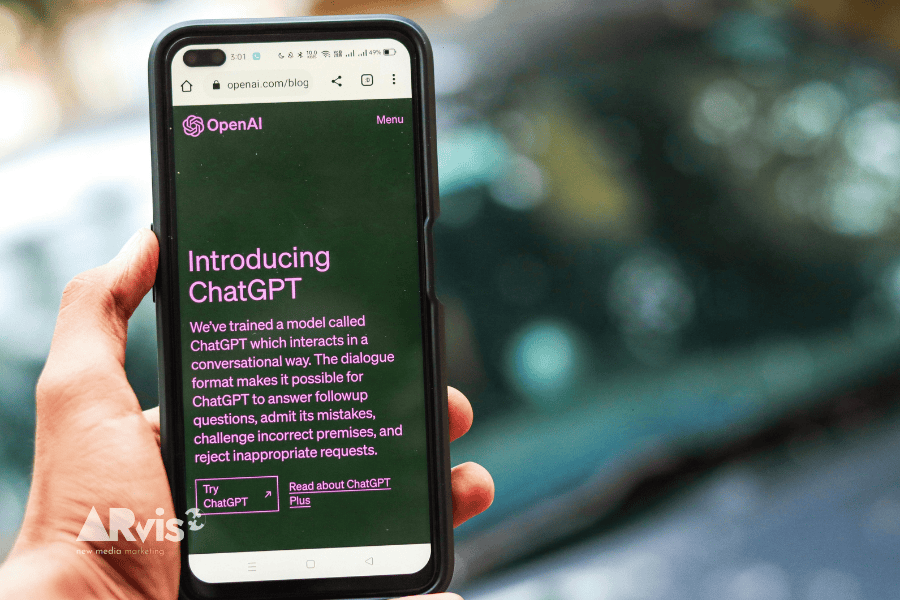
- ChatGPT to write text, generate ideas or analyze data.
- DALL·E or Bing Image Creator to create images from text descriptions.
- Runway or Synthesia to generate videos, spots or animated presentations.
- Perplexity AI or Claude to obtain synthesized information and reliable sources.
These applications make it possible to understand the potential of generative AI and use it concretely in everyday work: creating content, summarizing documents, translating text, or devising new communication strategies.
2. Take courses and dedicated training
Knowledge is the true key to competitive advantage.
Today there are artificial intelligence courses designed for professionals in every sector, not just for those working in digital. Managers, consultants, entrepreneurs, lawyers, architects, doctors, teachers and even artisans are discovering how AI can become a daily ally in their work.
Training offerings are multiplying: there are short AI courses for productivity, which teach how to integrate intelligent tools into software like Excel, PowerPoint or CRM systems; programs dedicated to AI for communication and marketing, useful for improving writing, social media management and content creation; and practical modules on AI applied to design, engineering and visual creativity, to learn how to use image generators and 3D models.
Likewise, the worlds of healthcare, law and education are opening up to courses dedicated to AI and data analysis, AI and decision support, AI and personalized teaching. In every field, the goal is the same: to provide practical skills to use technology consciously, turning curiosity into a real competitive advantage.
3. Study case studies and real-world applications of artificial intelligence
Nothing explains the impact of AI better than concrete cases.
Analyzing business case studies makes it possible to understand how companies are already using artificial intelligence to optimize processes, reduce costs or improve sales.
Examples?
- A fashion brand that uses predictive AI to analyze trends and collections.
- A retail chain that adopts intelligent chatbots to manage customer service.
- A B2B company that uses AI to create automated reports and content strategies.
Studying these examples helps turn curiosity into strategy, making it clear that AI is not a technological gadget, but an operational ally for every sector.
AI isn’t the future: it’s the present for those who know how to innovate
Artificial intelligence isn’t a trend to ride, but a cultural and operational revolution that is rewriting the rules of innovation. It’s not enough to “use” it: you have to understand it, experiment with it and integrate it into everyday processes.
Those who learn today to converse with AI – transforming it from a tool into a strategic partner – build a real competitive advantage, because they’re able to decide faster, communicate better and create more, with less.
AI doesn’t replace human thought: it amplifies it. And the winners will be precisely the people and companies that know how to use technology with vision, intelligence and curiosity.
Bring AI into your company with method and vision
Artificial intelligence is an accelerator, but without strategy it can become just another technological fad.
At ARvis we help companies and professionals truly understand how to use AI, identifying the right tools, the processes to automate and the opportunities to grow.
We always start from an analysis of the context and build a tailor-made path, step by step.
👉 Request personalized AI consulting for your business
You’ll discover how to use artificial intelligence to improve productivity, communication and your online presence. 🚀
FAQ
AI is the set of technologies that enable machines to understand, generate and make decisions based on data. It doesn’t “think” like a human, but it recognizes patterns, predicts outcomes and automates tasks.
Machine Learning trains models to recognize patterns and make predictions; generative AI (GenAI) creates new content (text, images, videos, code) from prompts. GenAI often uses ML techniques and advanced neural networks.
It personalizes messages and offers, optimizes ad campaigns, generates content, qualifies leads and estimates conversion probability. The result: more efficiency, less wasted budget, faster time-to-market.
AI replaces repetitive, low-value tasks, but it elevates the roles that know how to use it. The difference is made by skills, method and governance: those who integrate AI into their processes become faster, more precise and more creative.
It’s reliable when guided by quality data, human validation and clear metrics. “Hallucinations” are reduced with better prompts, fact-checking tools, retrieval on your own data and expert-in-the-loop review.
They concern data usage, ownership of generated content, transparency and bias. You need policies, informed consent, curated datasets, human controls and adherence to regulations (e.g. the principles of the EU AI Act) and tool licenses.
It depends on scope and scale: it ranges from freemium SaaS tool plans to enterprise projects (integrations, security, training). A “pilot → scaling” approach allows for measurable ROI and cost control.
For text: LLM/chatbot models; for images/videos: generators and AI video tools; for productivity: assistants on Office/Workspace; for data: analytics with AI features. The important thing is to define use cases and KPIs before choosing the tools.
Practical training (prompting, real use cases), internal policies, controlled sandboxes, impact metrics and a model of AI governance. Culture is the real multiplier: small projects, rapid feedback, then scale.
Related service: discover AI-gmented Solutions by ARvis — the agency that scales with you.