



AI-gmented: the ARvis philosophy to augment, not replace
AI-gmented is the ARvis philosophy born with the advent of Large Language Models: AI does not replace the professional, it empowers them. Just as in augmented reality, where the headset enriches the pilot’s perception, AI tools expand the capabilities, speed and data coverage of teams and individuals. The professional remains at the center: they validate, decide and sign off on the result.
Table of Contents
What “AI-gmented” means
By AI-gmented we mean a line of ARvis services redesigned “AI-first” to deliver the same quality faster and with greater reliability. It is an augmented intelligence approach: a human-machine partnership in which AI amplifies cognitive performance (analysis, decision-making, creativity), while the human retains guidance and accountability. (Definition aligned with the Gartner glossary on augmented intelligence.)
Why now
In IT and digital contexts, the difference is made by speed and precision. LLMs make it possible to:
- synthesize large volumes of data in minutes;
- generate variants and scenarios;
- automate repetitive parts of knowledge work.
But the final quality – relevance, tone, adherence to the brief, compliance – requires human oversight.
Why augmenting professionals is better than replacing them
Data and studies on productivity with AI
Independent research shows that AI raises the productivity of those who use it, especially less experienced profiles:
- In contact centers, the introduction of a generative assistant increased tickets resolved per hour by roughly 14–15%, with greater benefits for junior staff. NBER+2OUP Academic+2
- In a controlled study on GitHub Copilot, developers completed a task 55.8% faster than the control group.
These figures do not preach “replacement”, but a virtuous pairing: AI accelerates and broadens, the human orchestrates and verifies. Authoritative academic voices also recommend using AI to complement – not replace – workers, as reported on Business Insider.
The role of the professional: quality control and accountability
In the AI-gmented model, the professional:
- Defines the objective and the KPIs.
- Designs the workflow (prompts, sources, tools).
- Validates samples and final outputs.
- Signs off on the result and takes responsibility for it.
In this way, we avoid AI’s typical flaws (bias, hallucinations, off-brand tone) and maximize value.
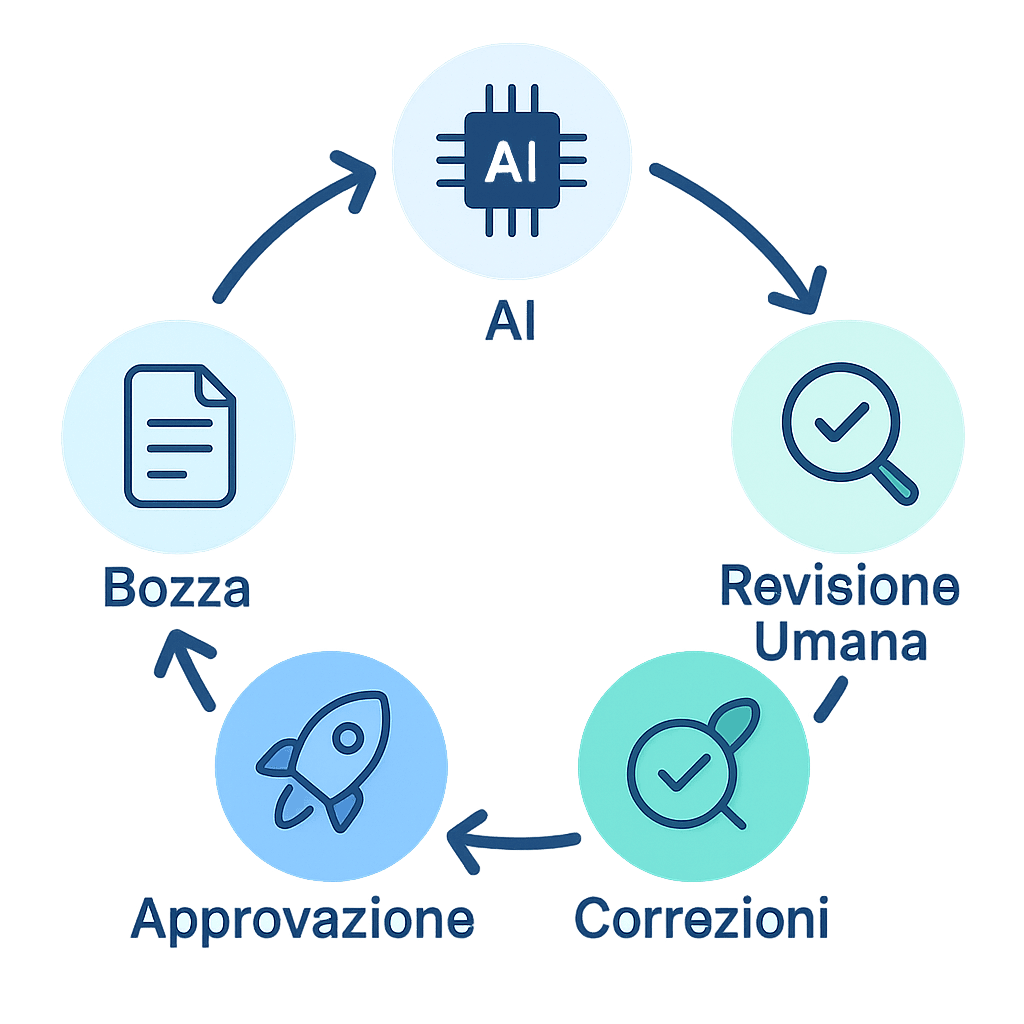
How an AI-gmented service works in practice
Typical workflow (5 steps)
- Process mapping: we identify high-impact activities (e.g. keyword analysis, ticket triage, content drafting).
- Tool selection: LLMs, retrieval over document bases, automations, with privacy and security policies.
- Orchestration & Prompting: we design modular prompts, agent roles, style constraints and automated checks.
- Human-in-the-Loop validation: sampled and full review for critical outputs; quality checklists.
- Measurement & iteration: tracking of time, accuracy and revision rate; we improve where AI fails to “grasp” the context.
Want to dive deeper into applied Prompt Engineering? Read: Prompt Engineering: guiding AI toward excellence (ARvis).
Link: https://www.arvis.it/prompt-engineering/
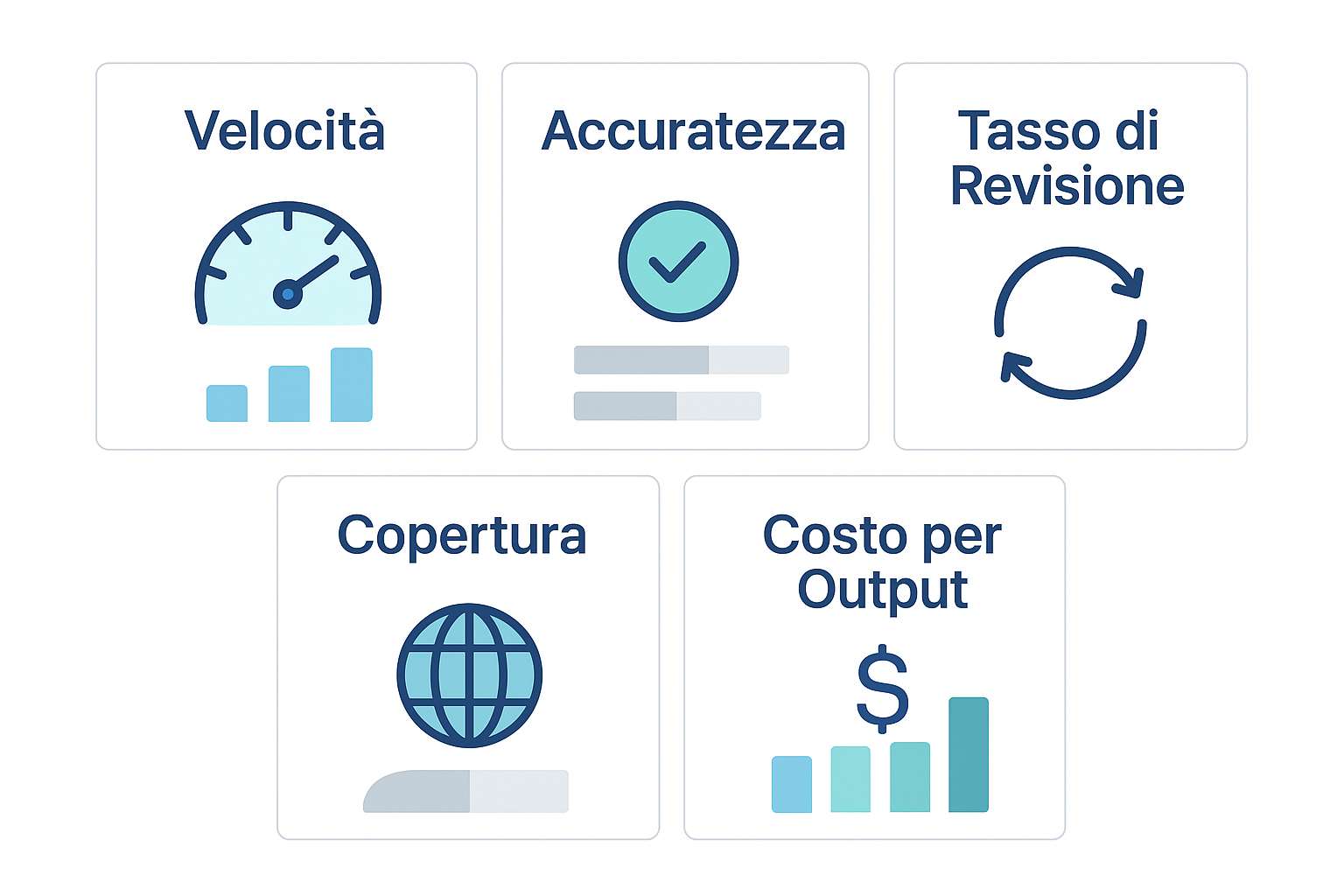
Metrics and governance
- Speed: minutes saved per task/role.
- Quality: errors per 100 outputs, rejection rate, brand consistency.
- Coverage: % of cases handled end-to-end with supervision.
- Cost: cost per output vs baseline.
- Risk & compliance: source tracking, prompt versioning, data auditing.
Real-world use cases (IT, marketing, content, data)
IT / Cybersecurity
- L1 ticket triage: classification, response suggestions, links to internal KB; the technician verifies and sends.
- Change log & documentation: automatic drafts from commits, with human control over acronyms and impacts.
Digital Marketing
- SEO & Content: outline ideation, draft generation, suggested internal linking, with final editorial editing.
- Performance Ads: copy/creative variant testing, clustering of search queries, campaign notes.
Content & PR
- Brand voice guardrails: prompts with approved examples; defusing of “hallucinated” tones.
- PR drafting: draft press releases, Q&A for spokespeople, with legal review.
Data & Reporting
- Narrative reports: LLMs that explain charts and anomalies; the analyst confirms and adds recommendations.
- Research: summaries from internal and public sources, with checked citations and links.
For an overview of hallucinations and how to mitigate them, read: Avoiding hallucinations in ChatGPT: is it really possible?
Link: https://www.arvis.it/evitare-allucinazioni-in-chatgpt-si-puo-davvero/
Common AI risks and how we manage them
Hallucinations
- Risk: invented or unsupported information.
- Mitigation: retrieval over verified sources, mandatory citations for critical claims, human review.
Bias
- Risk: stereotypes/inequities in the training data.
- Mitigation: testing on sensitive cases, neutral prompts, confidence thresholds and fallback to review.
Privacy & Security
- Risk: sensitive data in prompts.
- Mitigation: PII redaction, isolated environments, retention policies, access control.
Brand quality
- Risk: misaligned tone, inconsistent terminology.
- Mitigation: codified style guide, few-shot with examples, a “never-use terms” list.
Note: the literature shows tangible benefits but also heterogeneous effects: AI mainly helps the less experienced; senior staff see more limited or qualitative gains. This is why human oversight remains decisive.
How to do it: bringing AI-gmented into your company (operational checklist)
- Define the use cases with the highest workload (e.g. reporting, triage, drafting).
- Select the toolset (LLM, RAG, automations) with security requirements.
- Design the prompts with style constraints, sources and acceptance metrics.
- Put the human in the loop: sampled and final review of high-risk content.
- Measure and scale: time saved, correction rate, perceived quality, ROI.
Pros & Cons (quick):
- Pros: speed, data coverage, standardization, knowledge sharing.
- Cons: quality risk without governance; data dependency; variable inference costs.
Takeaway: AI drives, the professional decides.
Conclusions: a brand for the future of ARvis services
AI-gmented is the symbol of services that solve problems faster and with greater accuracy, without giving up human judgment. The professional’s sign-off guarantees quality and accountability, preventing bias or hallucinations from eroding trust. This is how we imagine the future: AI + human expertise, hand in hand.
Frequently asked questions (FAQ)
What is AI-gmented?
It is the ARvis philosophy in which AI augments professionals: more speed, more data coverage, human control over decisions and quality. (A concept aligned with “augmented intelligence”.)
Is it different from full automation?
Yes: AI-gmented involves a human-in-the-loop, with checks and a final sign-off. It reduces the errors of blind automation.
What results can I expect?
It depends on the use case; the literature reports double-digit productivity gains and greatly reduced completion times in well-defined tasks.
How do you reduce bias and hallucinations?
RAG over verified sources, prompts with constraints, quality checklists and human validation on critical tasks.
Where to start?
Mapping of high-workload processes, tool selection, prompt design, validation, metrics. If you need guidance: ARvis AI Consulting.
Related service: discover AI-gmented Solutions by ARvis — the agency that scales with you.