



Name, place, animal … fruit and vegetables! Gamification and online search trends
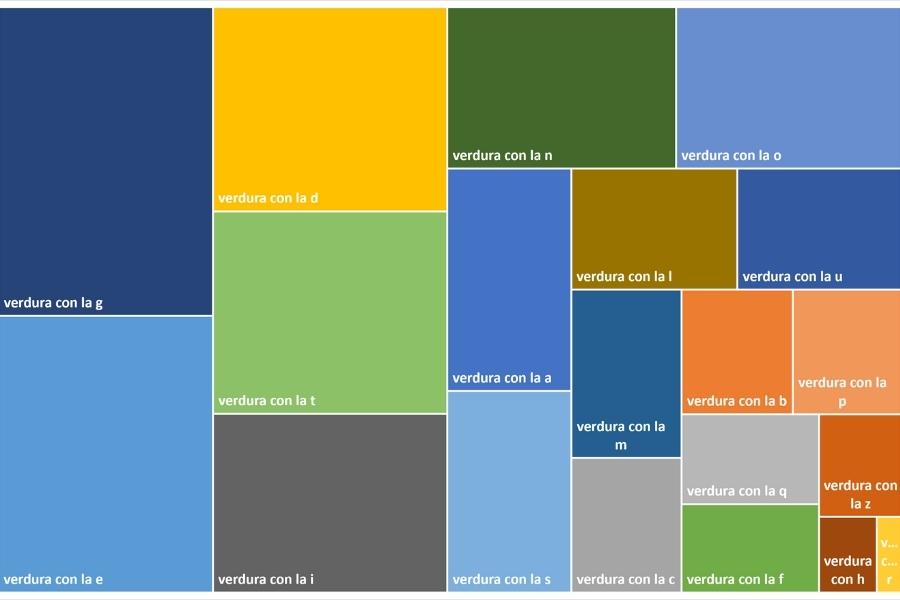
Gamification can start from the most traditional games. For example, how can you make the timeless game of “name, place, animal” more compelling? By adding a few extra categories to the competition, such as fruit and vegetables! This is what emerged, along with other interesting data, from two studies carried out by our in-house department. And this must have been the thought of millions of Italians during the various phases of lockdown. By analysing online queries, in fact, you can notice search spikes related to the “…that starts with…” topic precisely during the periods of the strictest Covid restrictions. Not only, as you might expect, in March 2020, but also in December of the same year and in March 2021. A trend that continued into the new year as well, with a considerable increase in January 2022, a sign that the gamification process is only just beginning. So, which were the fruit and vegetables that proved trickiest for Italians, to the point of having to resort to Google searches to win the game? Vegetables starting with “g” and fruit starting with “e”: these were the toughest challenges of the last two years!
Table of Contents
Gamification: what it is, why and for whom it matters
The term gamification refers to the use of mechanisms typical of games in other contexts. In other words, playful elements are applied outside the game itself, turning something that originally has nothing to do with the world of games into play and competition. In Italian it could be translated with the term “ludicizzazione”, whereby elements such as rewards, levels, leaderboards and scores are applied to a non-playful context. A very useful system for marketing and the new frontiers of communication: applying playful elements to services and products makes them more appealing, interesting and engaging. Building competition around brand elements increases awareness and improves the audience’s sentiment towards the brand. Through gamification it is possible to reach a wider audience, encouraging loyalty and creating a genuine relationship of value with the audience. From this point of view, fruit and vegetables searched online can become an added value for online grocery retail, but also a strategic asset for agricultural businesses and the food-service sector. Using online search reports to identify new trends and possible future scenarios, and adding playful aspects to your commercial and value proposition, are an important tool for improving your business.Which fruit starts with “e”? Gamification and SEO
Now it’s time for the challenge: the letter drawn is “E”. Everything seems to be going smoothly and you start filling in the boxes at full speed: Emanuele, elastic, Empoli … Panic: which fruit starts with “e”? A question that recorded almost 50,000 absolute searches in March 2020, over 22,000 in December 2020 and 18,100 in January 2022. Fruit starting with “e” is the most searched among queries about the initial letters of fruit. Indeed, the difficulty is very high: there are only two fruits that start with this letter: eucalyptus, the fruit of the tree of the same name, and hesperidium, the fleshy fruit typical of citrus. After “e”, the letters that most puzzled Italians were “i”, “t” and “g”. With the last one you can play both guarana and jujube, while with “t” only tamarind. More problematic is “i”, for which no fruits exist. It comes as no surprise, then, that the number of absolute searches exceeded 40,000 queries in March 2020 and reached almost 15,000 in January 2022. If you want to surprise your friends with more common letters too, you can play tomato with “p” and pumpkin with “z”. Although they are commonly considered vegetables, in fact, they are properly fruits, and they will let you win plenty of challenges!And which vegetable starts with “g”? Gamification and ecommerce
Online search reports: not just gamification
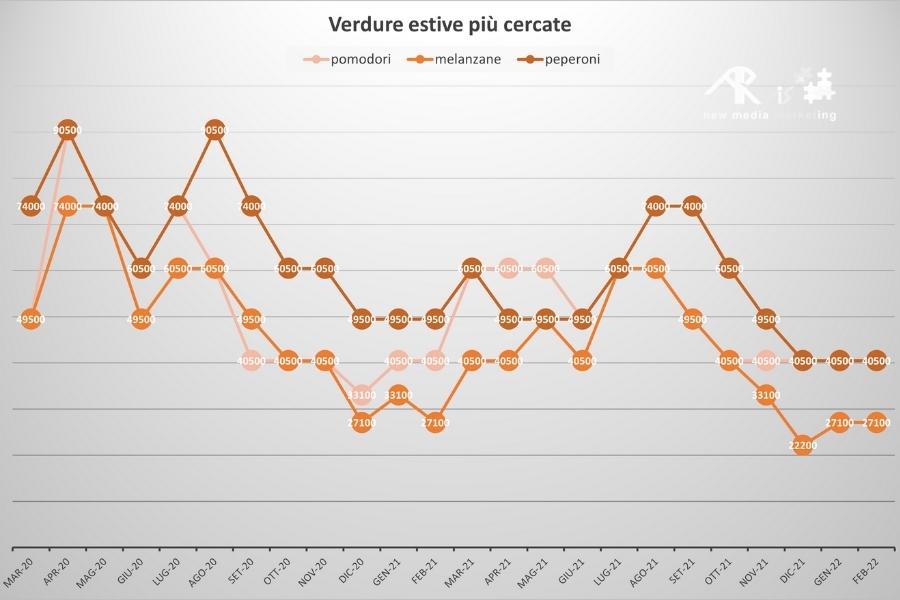
These curiosities emerge thanks to online search reports on the most searched seasonal fruit and vegetables online. An in-depth and detailed investigation that makes it possible to identify trends and habits, showing a snapshot of the market, interests and purchase intentions. For all operators in the food sector, grocery retail, supermarkets but also food service, online search reports can become an added value. By showing which foods and ingredients users’ interest concentrates on the most, the reports can kick off communication and SEO optimisation strategies, but also serve as the basis for editorial plans and blogs.The most searched vegetables online in summer are three fruits!
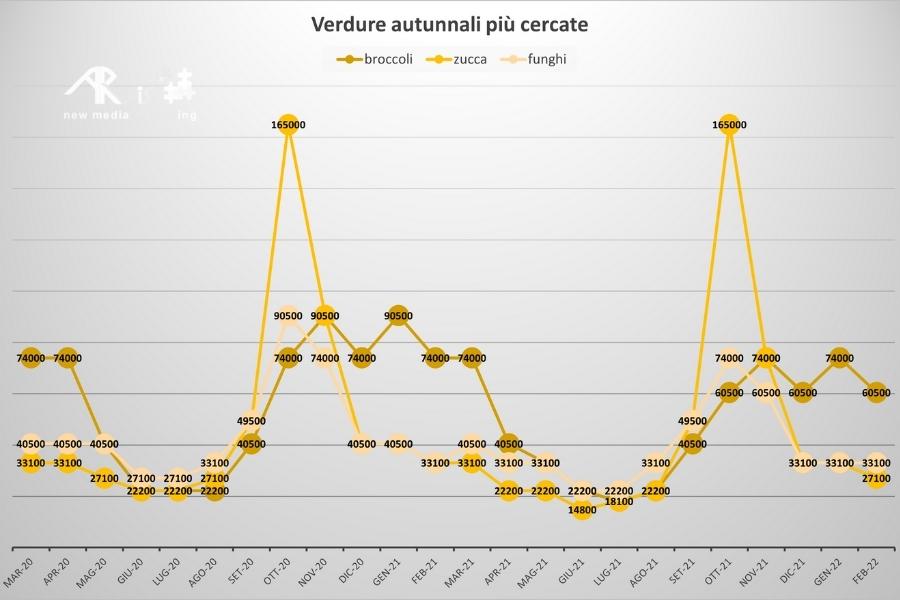
The most searched autumn vegetable is the pumpkin, which is a fruit! Gamification and seasonality
Seasonal fruit in autumn
The pumpkin thus paves the way for autumn fruit. Here, the undisputed stars of October queries are chestnuts, which exceed 400,000 monthly searches. A highly concentrated search volume, which already in November drops drastically. Pomegranate, grapes and persimmons compete for third place on the podium. In terms of average search volume, it is grapes that take the bronze medal, with an average of 58,054 monthly queries over the last two years. Looking at the peaks, however, it is a head-to-head between pomegranate and persimmons, with the former totalling 143,100 absolute searches in October, both in 2020 and 2021, and the latter reaching 144,100 queries in November 2020.Spring is the season of strawberries
After autumn, spring is the most searched season for fruit. The days that grow longer after the cold months and the darkness already in the afternoon, the longing for holidays and the blooming flowers, spark a desire for new flavours and colours. So spring fruit sees its online searches grow as early as February, reaching its peaks between March and April. In the three months of March, April and May, the search volume exceeds 25,000 queries. The peak was recorded in March 2020, with as many as 31,450 online searches. What are the most searched fruits in spring? Between March and April there’s no contest: Italians crave strawberries! The strawberry represents the beginning of spring: it starts to bloom and ripen just as the cold ends. Strawberries mark the start of the warm season, a foretaste too of the summer to come. In April 2020 queries exceeded 90,000 units, while in 2021 the peak was in April with 74,000. While strawberries reach the highest peaks, in terms of average the most searched spring fruit is the kiwi. The average search level throughout the year is 47,120 online searches per month. Here peaks are recorded between February and March, and queries rarely drop below 30,000 per month in the other months too. A fruit that is particularly loved and searched for throughout the year, also for its properties and benefits. When you manage to blend the irony of gamification with information and advice, communication and marketing benefit greatly. That is why we always recommend planning editorial calendars that feature different tones of voice. If you are interested in a gamification marketing proposal for your products or services, contact us: we will find a strategy to improve your online visibilityRelated service: discover Marketing Consulting by ARvis — the agency that scales with you.