

How to do tourism marketing online
The tourism industry travels at the speed of a click and being visible online is essential: so how do you run effective tourism marketing in the digital space to win new customers??
Holidays, journeys, romantic getaways, adventure weekends and food-and-wine tours: how thrilling the world of tourism is! An industry full of opportunities, where emotions and experiences follow one another in rapid succession. At the same time, however, competition is high and fierce. Competitors are many and, in the Internet era, there is no time to lose.
It is no secret, in fact, that hotels, restaurants and flights are now booked with a click, often from mobile devices. This means that having a strong online presence is now non-negotiable for every tourism organisation and operator.
Table of Contents
3 tips for tourism web marketing
Website, social media, advertising: there are many channels through which to establish your online presence. Each touch point must be able to engage users in a different way, leading them to take the desired action. For example, the website for bookings and social media for building an active and loyal community.
But how do you achieve these goals? Of course, much depends on the type of tourism business, but there are 3 evergreen, cross-cutting tips to always keep in mind for a tourism digital marketing strategy that really works.
1) Visual marketing for tourism
Journeys and holidays are unforgettable experiences, a source of emotions to always remember with a smile. This means that users must be moved and engaged. And, in an ever faster and more frenetic world like the Internet, they must be won over in a fraction of a second.
That is why tourism visual marketing is essential. Ultra-high-quality photos, emotional and engaging videos, eye-catching images that leap off the screen. Every digital touch point of the business must feature this type of content, adapted in the right form.
There is no online tourism marketing without video marketing and photo marketing. From this point of view, one way to stand out from competitors can be to bank on 3D virtual tourism, with immersive virtual tours that let users “step into” the screen and preview the experience.
2) Know your audience and diversify your messages
Studying your target audience is essential for any marketing activity that aims to be effective, and this also applies to tourism marketing. But what does it mean to know your audience?
Not only does every tourism organisation have its own target audience – for example, a family hotel compared with a resort aimed at young people – but the communication channels themselves also speak to different audiences.
This means you have to adapt your messages according to the channel you use and the specific audience you want to reach. To give an extreme example, promotional content for print or offline communication is very unlikely to work on social media.
3) Stay in touch with your customers
Those who work in tourism know it: there is one rule that never goes out of style: it is easier to retain an existing customer than to win new ones. Customer retention, therefore, must be a priority in every tourism marketing strategy.
To retain customers, besides providing them with an unforgettable experience, you need to stay in touch. From this point of view, newsletters and DEM are essential tools. Communicating directly and in a personalised way with those who have already been customers is the best way to build their loyalty. For example, the newsletter can be used to share news, while e-mail marketing is ideal for limited-time tourism promotions dedicated exclusively to customers.
Tourism marketing is not all the same
Beyond some elements common to every tourism operator, it is undeniable that every tourism business has its own peculiarities. What you need to do, therefore, is study your own characteristics, the differences compared with competitors and make the most of your strengths.
Tourism digital marketing works when it is tailor-made. It is a kind of bespoke suit stitched specifically for that facility or business.
It is therefore necessary to assess in detail the different sectors in which a tourism operator may find itself.
Online tourism marketing for hotels
Hospitality is a fundamental component of the tourism world. Hotels, inns and accommodation facilities must be at the cutting edge when it comes to how customers behave, both in searching for information and in making bookings.
How to build a hotel website that converts
The first step in bringing an accommodation facility online is the website. What should a website for a hotel or inn be like? The perfect site is always one that is simple, clear and intuitive. For an accommodation facility this means having two qualities: being mobile first, that is, allowing a flawless browsing experience on mobile devices; and being SEO-optimised with a local focus, in order to appear in the top positions of search engines for geolocalised queries.
In this way the site will obtain quality traffic with a high probability of conversion.
What lead generation is and how it works
The main goal of a hotel website, in fact, must be to increase bookings. Lead generation is precisely the generation of contacts, in this case customers interested in staying at the facility.
To do this, the site must be structured in a way that enhances CRO, that is, conversion rate optimisation. The booking process, therefore, must be simple and straightforward, and the user must be encouraged and guided through to the online booking.
How to increase bookings with Google Ads for hotels
An excellent way to increase bookings is to promote the hotel online. But through which channel? The Google network is the best channel for this purpose. While Google Display campaigns are excellent for branding, with Google Search campaigns you can appear in a privileged position in the SERP, intercepting specific keywords in users’ queries.
What is more: for accommodation facilities, Google has developed a specific system: Google Ads Hotel. By registering the facility on Google Hotel Center, you can link the hotel with the Google Ads account, then structuring tailor-made and optimised campaigns.
The benefits of a virtual hotel
Once they land on the site, however, users want to get to know the facility. For a hotel, the rooms must be the crown jewel. So why not include a hotel virtual tour that lets users step inside the facility comfortably from their own living room?
With Matterport technology, in fact, the hotel is transformed into a virtual hotel that you can immerse yourself in from your device. In this way the user will be able to explore the hotel’s spaces, feeling somehow already on holiday, a kind of virtual tourism that takes users by the hand and entices them to move on to real tourism.
The restaurant sector is going online too
If there is one undisputed protagonist of the Internet, and of social media in particular, it is surely the food sector. Between video recipes, food bloggers and reviews, online people do nothing but talk about food.
That is why those who work in the restaurant sector must know how to turn to their advantage all the trends that emerge online. Especially in the case of a restaurant in a tourist destination, where visibility comes above all from passing customers.
How to promote a restaurant online
Online tourism marketing for a restaurant should always be conceived with a geolocalised focus. This means registering the business on Google My Business and optimising the site with a local SEO focus.
Not only that. Today travellers want to book in a smart, simple and fast way. Highlighting the WhatsApp Business contact can be an excellent idea for increasing the number of covers.
And then you cannot forget social media. Dishes are eaten first with the eyes rather than the mouth: quality photos and videos are essential. A further way to promote a restaurant online is through digital food marketing activities using digital PR and influencer marketing to increase the venue’s visibility.
How to promote a pizzeria online
When it comes to pizza, as everyone knows, Italians are hard to win over. Everyone has their trusted pizzeria and everyone knows the perfect recipe. So how do you sell pizza online? Or how do you win over a tourist, making them crave pizza even in a place they do not know?
In this case, photos and videos might not be enough. And not even online reviews might be sufficient. It takes something more. For example, a social contest, a challenge to take part in with hashtags and stories, to give customers a different experience.
How to use TripAdvisor
When you are in a new place, before choosing where to go and eat, one of the new habits is to check TripAdvisor. It is therefore an excellent idea to be present with your facility on this portal. But how do you use TripAdvisor for tourism marketing?
The review site gathers billions of comments on accommodation facilities, venues and businesses, as well as a travel forum, but it is for the restaurant sector that it really makes the difference.
It becomes essential, therefore, to add a complete and convincing profile. But above all you need to encourage users to leave reviews and respond to their comments. An active profile will always come across as more attractive and alive, showing users that the business cares about its image and online reputation.
The travel agency must make itself found online
With the world of online tourism, travel agencies too have seen their role change. Today these businesses must above all be OTAs, that is, Online Travel Agencies. In practice, a travel agency has always been a tourism promotion company; now it has become an online tourism promotion company. Journeys and holidays, in fact, begin, continue and end online. From searching for information to booking, and then through reviews and social sharing of the shots and best moments of the experience, there is nothing that does not happen online.
It is essential, therefore, to have a visible and high-performing travel agency website. The site must be SEO-optimised to appear in the top positions of the SERP. In addition, it must contain clear information, especially regarding packages, cruise holidays and travel solutions.
An excellent idea is to include a blog of travel tips. In this way you will give users a series of original and interesting content, which will bring traffic to the site and convince potential customers.
How to advertise on YouTube for tourism marketing
By going online, the travel agency will no longer be a simple travel agency. Its task, in fact, is no longer to organise and book holidays: OTAs sell experiences.
Users crave emotions, new sensations, discoveries. To intrigue and win them over there is one particularly suitable channel: YouTube, and in particular YouTube Ads.
Advertising on YouTube, in fact, allows you to insert short and eye-catching videos before the content the user wants to watch begins, or during playback if the duration is long. These advertising clips are excellent for travel agencies to showcase possible destinations, through emotional videos, rich in colours and sounds that make people dream. The same videos, suitably cut, will then be useful for all types of social advertising, from Instagram to Facebook to Tik Tok.
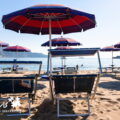
Tourism marketing to bring customers to the beach
The world is divided into two broad categories: those who love the sea and those who prefer the mountains. The latter have specific points of reference, with mountain ranges, ski slopes and forest trails that they now consider part of the family. Those who love the sea, on the other hand, tend to change location more often, some in search of greater peace and quiet and others for the nightlife or the services.
Increasingly, therefore, going to the beach is part of a broader experience. And this is excellent news for anyone who owns a beach club! Why? Because it can be the perfect lever for winning online communication! In other words, you can convince users to come to your beach club not only by describing your services and the exclusivity of your offer, but also by communicating the whole context that awaits them. To do this, a website with a SEO-optimised blog is essential, its content strategically designed around online search reports and trends.
Related service: discover Advertising by ARvis — the agency that scales with you.